Middle And High School Report On Successes And Problem Areas At BOE Meeting
By LYDIA BERGLAR
News Editor
After hearing State of the Schools reports from both elementary schools last month, the Dade County Board of Education heard reports for Dade Middle School (DMS) and Dade County High School (DCHS) at the Feb. 24 meeting.
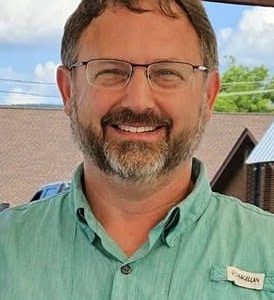
Michelle Beeler (DMS principal) reported on CCRPI (College and Career Ready Performance Index) and MAP (Measures of Academic Progress) test scores. The CCRPI categories are content mastery, progress, closing gaps, and readiness.
Beeler explained that English Language Arts and science both saw progress, social studies saw a very minor drop, but mathematics saw a larger drop. The social studies teacher was new to the subject, so the academic coach and administration are working with the teacher to make sure lessons align with state standards.
The math scores dropped by 5.42 points this year. The school found that low sixth grade scores impacted the entire score, so the school made a staff change in that grade level.
Of the MAP data, Beeler noted that these tests are administered three times a year which provides beneficial feedback throughout the year, but MAP follows the timeline for national standards. Math and science are particularly impacted by the discontinuity between national and state timelines. The middle school’s scores typically drop from fall to winter but get back on track by spring. This is because national standards include things like geometry in the winter test, but state standards don’t teach geometry until spring.
The school is glad to report that 68 percent of seventh graders met their winter MAP growth goal. This is an improvement that Beeler said is thanks to two teachers. She highlighted other math teachers who achieved improved test scores.
Beeler also noted the importance of “struggle time” which is required by the state standards. “The highest [performing] kids don’t like to struggle, they’re not used to struggling…We’ve had phone calls where, ‘My student’s not being taught. The teacher’s not doing anything.’ That’s because we now have struggle time.”
One of DMS’ goals is to provide students with a voice in their learning. Beeler asked the student advisory board how they see this in action, and some of the responses were: “We’re able to tell teachers when the work is difficult; they don’t make us feel dumb. We have lots of choices about how to show what we know. It’s okay to ask teachers to slow down. Teachers wait until we are ready to show mastery and are flexible with dates to make sure we understand. They give extensions and teach a new way if the whole class is confused.”
Beeler then highlighted the importance of attendance, as has been discussed throughout this school year. DMS attendance is currently at 93 percent, and the school has several rewards and competitions to encourage good attendance.
She was glad to report that DMS students overall don’t have major discipline problems. As of late February, 79 percent of DMS students don’t have any office referrals, and 82 percent have zero demerits. “We’ve got good kids, and when you look at the breakdown of the discipline, you can see the serious stuff is very minute.”
She noted that most of what DMS sees is typical classroom management issues like students talking too much or not keeping their hands to themselves.
She highlighted safety and more quotes from students, which included: “We don’t have to stress each day. We know we are safe. We love seeing the police every morning. This sends a message that no one can mess with us. Drills help us know what to do if something happened. I can name ten teachers I could go to right now if I had a problem.”
Another DMS goal is to engage stakeholders through two-way communication. This is accomplished through parent conferences and workshops, the parent advisory board, etc.
When reporting on professional development, Beeler first noted how engaged the staff is with student activities. Also, teachers complete at least ten trainings a year. Some are required, but teachers also can choose other trainings. These offerings are based on staff needs and their answers in the staff survey. Mentors and observations also play a big role in professional development.
Jayne Griffin (At-Large representative) asked Beeler what she goes to bed thinking about, to which Beeler said, “The children who are in crisis. That’s what keeps me up. Kristin Barrett shared with you the number of times we call the crisis unit, the number of times DFCS is involved with a child…Test scores sometimes keep me up, but then we find a plan of action to address it.”
She shared one example of the lack of student learning opportunities at home. During a virtual learning day, some students were supposed to read for 20 minutes at home, but one student couldn’t find a book, magazine, newspaper, or any printed material in the house.
Beeler said, “There’s all kinds of studies where you can correlate how successful a child is going to be by the number of books in the house. This kid couldn’t even find a newspaper. That’s what keeps me up at night.”
Brent Cooper reported on the high school, starting with CCRPI. Under the content mastery category, DCHS improved from 2022 (56.8) to 2023 (62.1) and again to 2024 (63.3). Cooper said this is not where the school wants to be, but they are glad to see improvement.
Addressing the Georgia Promise Scholarship, Cooper said that being on the list of the bottom 25 percent of Georgia schools surprised him. The school has learned that two CCRPI categories (progress and closing gaps) were used to establish this list.
When reporting that the four-year graduation rate went up in 2024, Cooper shared how the graduation ceremony impacted him. “This past year, it was really cool for me because I was thinking, ‘Man, I really know the hardships that person’s faced, or I know the improvements that person made since they were in alternative school as a freshman, but now here they are graduating.’ So, I love to talk about graduation rate.”
Cooper is a big fan of Georgia MTSS (Multi-Tiered System of Supports), noting that the system provides early warning indicators. Regarding attendance, MTSS shows that 48 percent of DCHS students are on track, 19 percent are at risk, and 33 percent are off track (have missed ten percent or more days).
Regarding behavior, 92 percent of DCHS students are on track, seven percent are at risk, and only one percent are off track (only four students had six or more referrals in the fall semester). Cooper noted that the students are overall great kids.
He touched on safety, saying that Dade is the safest out of the three school systems he’s worked in. Johnny Warren (Trenton representative) noted that his daughter is an instructor at Georgia Northwestern Technical College, and through her job, she visits all the schools in the area. She’s found DCHS to be the most secure and difficult to enter as a visitor.
Of stakeholder engagement, Cooper highlighted the parent council, career fair, and various community events that make use of the high school building.
Of professional development, he reported that Chastity Steadman (assistant principal) meets with every new teacher once a week for the first quarter, and all teachers attend three “lunch and learns” each semester.
Moving on with the meeting, Josh Ingle (superintendent) explained that inclement weather sometimes causes remote learning days instead of a completely off day. When there’s enough snow for kids to enjoy playing in it, the schools generally close, but when it doesn’t make sense to use a snow day, the schools pivot to remote learning.
During the Feb. 19 snow, News Channel 9 reported on remote learning days and parents’ varied responses. The news crew came down to Corner Coffee for footage and photos of families completing school assignments.
Ingle noted that pre-K registration (and kindergarten registration for students who didn’t attend pre-K) is now open.
During the monthly financial report, Loran Grasham (business services director) included a small example of the significant impact of grants: In the month of January, 49 staff members were paid for with grants.
The board looked at a policy change suggestion to be voted on next month. Ingle explained that questions have come up about overtime pay for classified employees (non-admin or non-teacher positions). The updated policy provides clear, consistent answers that the most recent 2017 version didn’t provide. They did not discuss the details of what the policy changed.
Ingle noted that it can be cheaper to pay an existing employee for overtime than to hire a new employee and provide another benefits package.
The board approved an MOU with Dalton State College through which DCHS graduates who major in education at Dalton State are guaranteed an opportunity to complete their student teaching in a Dade County School. These students are also guaranteed an interview for open positions in Dade County Schools.
The personnel report is as follows:
- Retirement (end of FY25): April Goode, Michelle Doane-Beeler
- Resignation (end of FY25): Brittany Meadows, Misty Rooks
- Hire: Marisa Smith, Frances Taylor
- Substitute Teacher: Kendal Emmett