The Housing Problem Part Two
By LYDIA BERGLAR
News Editor
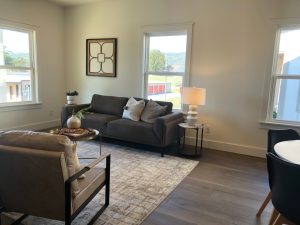
Photos courtesy of Alliance for Dade – The Faircloths have been working on the Woodford at Glenview development in Trenton over the last year. This is one of the living rooms in the small homes selling for under $300,000.
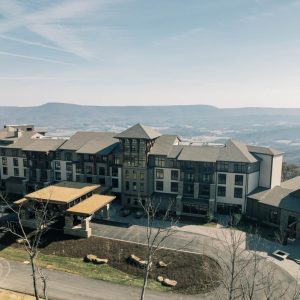
Last week, we heard from two builders about challenges with affordable housing, and this week, we’ll cover Ryan and Melissa Faircloth’s insight. Many readers will be familiar with one of their projects from 2024: Woodford at Glenview in Trenton.
The couple is involved in multiple aspects of housing, from investing and building to flipping and renting. Melissa is also a real estate agent who owns Faircloth Realty.
Echoing Troy Duble and Jason Coffey’s comments in last week’s article, the Faircloths confirmed that their profit margin is typically 15 percent. While they have yet to sell any of the Woodford houses, the Faircloths anticipate reaching the typical profit margin with the houses listed for around $240,000-280,000.
Melissa explained that when flipping houses, she sets the price based on the profit margin she would like to reach.
The two completed Woodford houses currently for sale are 1,180 square feet for $236,000 and 1,250 square feet for $250,000. Both will cost buyers $200 per square foot. This is just under the cost of the two Oak Avenue houses discussed last week, but the Woodford houses have small yards and no garages.
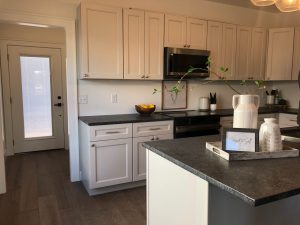
Melissa said, “There is a younger generation that doesn’t want to mow their yard and doesn’t want to do maintenance. That’s one of the things we thought about when we built them. Maybe they’re paying a little bit more, but they’re not having to worry about maintenance for a while.”
Ryan noted that he’s considering adding garages to several of the homes, which would mean cutting several homes from the planned total of 21. (They plan to sell the first six homes before building the rest.) The Faircloths have heard feedback that buyers would like garages and/or more space to park. Currently, the Woodford driveways only have space for two cars.
Reducing the lot size for these homes is one way the Faircloths worked to reduce costs. Ryan noted that getting the reduced size approved by the City of Trenton went well, but the jury’s out on how the market feels about smaller lots. He said he isn’t sure if Trenton is ready for smaller lots.
Also, they bought materials in bulk. Another builder in Cleveland, Tenn. is building the same style of homes with the same materials, so the Faircloths worked with him to get a good rate on materials. All of the Woodford houses use the same flooring, but the team added some touches to keep them from being identical. Melissa said, “I’m not a fan of everything being so cookie cutter,” but bulk materials were required to build more affordable homes.
Ryan noted that they opted for rock foundations and Hardie siding, saying, “I could have saved $8,000 per house if I had skimmed the foundation and put vinyl siding on. My goal first is quality and value for our community.”
The Faircloths noted that these same sized homes in Cleveland are selling for around $300,000-350,000.
The pair also shared insight about 145 Oak Avenue, a recent flip project that sold for $239,000. The house is 1,056 square feet; it sold for $235 per square foot.
When Melissa bought the run-down property, she knew they would have to gut it, but as they got into the project, they found more issues than first anticipated, like rotten floor joists.
One problem they hadn’t run into until flipping this house was clay sewer lines running to homes in Trenton. The old clay lines could add an expense to home buyers, flippers, or property managers. For this house, the Faircloths contacted the city who jetted the line to make sure it flowed, and they were spared the expense of updating the line, but it could have greatly increased the cost of flipping the home and, therefore, the consumer price.
The Sentinel asked the Faircloths what other challenges they’ve faced when building affordable homes. The biggest issue Ryan noted was rock. For Woodford at Glenview, blasting the rock added $30,000 to the project budget.
The Sentinel also asked about the target market for the Woodford homes. The Faircloths had thought retirees/senior citizens would be interested, but the steps have deterred many in that demographic. Therefore, first-time home buyers are the primary market. The Faircloths took low-income USDA loans into account and budgeted $10,000 per house to cover closing costs.
So far, they’ve seen interest from their target market with young couples, locals, and first-time home buyers looking at the houses.
Of Woodford at Glenview, Ryan said, “It’s definitely a repeatable process, but I don’t know about around here because there’s only so much land that’s on sewer. To do a project like that, you have to be on sewer.” The land required for septic systems makes high-density developments impossible in Dade.
The Faircloths also noted the impact of the ever-changing market. Melissa said that in the first half of 2024, smaller homes (like the Woodford homes) were moving, but now, the luxury market is hot. She said anything over $400,000 is currently selling along with fixer uppers under $200,000 while those in between have slowed down.
As to which (flipping or building new) is more sustainable for a business model, Ryan said, “The thing about flipping houses around here is that because there were no codes, when you tear into an old house, you find all sorts of problems so your expenses go up.”
Melissa added, “It’s getting harder to find something to flip because even the houses that look like they need a bulldozer, people are wanting a premium for them, so there’s no room to make a profit.”
Ryan said, “I like new construction because I know exactly what we’re making, what we’re putting in there,” and Melissa added, “I like to make ugly things beautiful.”
The Faircloths talked about increased material costs. It currently costs them about $147 per square foot, but they remember the days of being able to build for $90 a square foot. Ryan said, “When we renovated The Groovy Nomad, about halfway through that project, inflation hit and everything I was buying tripled in price.”
Ryan also sees a need for reliable contractors in our area. He said, “All you have to do is do what you say you’re going to do, do it for the price you say you’re going to do it, and do it in a timely manner, and you’ll slaughter all the competition.” Melissa noted that there are great contractors around, but they come with a big price tag. Frankly, quality work costs more.
They noted that the overall cost of living and high interest rates make finding an affordable home a challenge. In Ryan’s opinion, “I don’t think there’s anything affordable anymore. For someone making $20 an hour, how are you going to afford these houses?”
Of mobile homes, he said, “Today, some people can’t even afford those.” Buying the land and putting in septic on top of purchasing the mobile home adds up quickly. “Now people are going to RVs. I’ve got a small RV park, and for some people, that’s their home.”