Schools Start Friday: Principals Talk Challenges, Goals
By LYDIA BERGLAR
News Editor

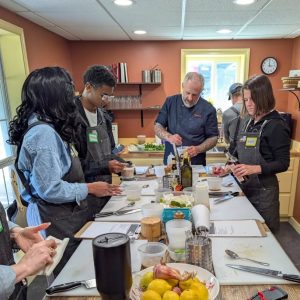
Photo by Lydia Berglar – Pre-K teacher Katy Vaughn (right) and Tonya Riley (paraprofessional) work together to get the Davis pre-K classroom ready for students.
Dade County Schools’ fall semester begins this Friday, August 9, and the Sentinel sat down with all four principals to hear about goals and challenges for the coming school year. This is the first year since 2021 that none of the principals are new to the role, and only one of the assistant principals (Crystal Blevins at Dade Elementary School) is new.
Following up from last year’s conversation about attendance and positive behavior, the Sentinel asked about progress in those areas. PBIS (Positive Behavioral Interventions and Supports) will continue like normal, although Dade Middle School is adding teachers to the program so they can be awarded when they go above and beyond.
Charity Barton (Davis Elementary School) added, “PBIS is about consistency so that the whole building has the same mentality around noticing kids’ positive behaviors, and we’re keeping the rules consistent and explaining expectations.”
Attendance is still an area of concern, and the schools will continue to use incentives and repercussions to encourage attendance, but Brent Cooper (Dade County High School) said, “We specifically looked at unexcused absences, and we made strides in that area last year.”
The high school still hopes to improve attendance, because even though there were fewer unexcused absences, 250 students (out of roughly 600) missed 15 or more days last year due to both excused and unexcused absences. Cooper said that the Department of Education defines chronic absenteeism as 15 days in a year, meaning that about 41.7 percent of Dade’s high school students were chronically absent.
Melissa Valtierra (Dade Elementary School) reported that 189 DES students (out of about 760) missed between 14-20 days last year. Excused or not, these are the numbers the state looks at, and as Cooper said, “You’re missing instruction.”
Michelle Beeler (Dade Middle School) added that learning happens best in the classroom rather than through packets or online methods. “We can’t just give parents a packet like we did during COVID-19. That was worst case scenario survival, but it wasn’t real school.”
Valtierra agreed, “Nothing replaces being in the classroom and having that direct instruction by the teacher.”
The principals explained that tardies and early checkouts are also impacting learning, even though these are not counted as absences. Barton said that Davis students who are consistently late miss large amounts of reading time, which puts them behind.
DCHS saw improvement in tardies: Two years ago, 96 students had five or more unexcused tardies. Last year, that number dropped to 36 students. Cooper explains to students that being on time has implications in the real world. “We’re trying to get students ready for work, and just showing up on time to work matters. If you don’t show up or consistently show up late, you are going to get fired.”
The principals noted that there are, of course, valid reasons for absences, and they urge parents to contact the schools in these situations. Barton said, “If there are certain things keeping them from getting here, if it’s a medical issue, communicate with us and we may be able to help them address barriers.” Beeler added, “I encourage families to use the bus if it’s a matter of tardies. It gets students here on time, and it’s easy.”
Sentinel readers may be familiar with discussions about literacy from this year’s school board meetings. The principals explained that literacy work at the middle and high school is coming, but the primary focus thus far has been on early grades. Barton explained that each principal met with a literacy coach from the state last year, but this year, they’ll meet all together. “We’ll talk about, as a district, what does improving literacy look like now that we’ve established some things at the school level?”
So far, the elementary schools have seen great success from teachers who are trained in the Orton-Gillingham (OG) method. Valtierra said, “OG changes how teachers teach. It shows them how to teach phonics to younger children.” Barton added, “The training discussed a lot of the research behind the OG method. It highlighted the importance of doing multisensory reading instruction.”
At the middle and high school levels, the area for improvement is reading comprehension. Cooper said, “OG training excites me because our students will be more prepared when they get to middle school and high school.”
Some of the highlights from last year were related to literacy progress. Barton said, “We’ve had a lot of students who, through interventions, have become readers,” and Beeler was extremely pleased that 6,929 books were checked out from the DMS media center last year.
Valtierra reported that DES’ monthly reading challenge was a hit. She recalled one student who had failed two years of Georgia Milestones English language arts assessments but then participated in the challenge, earned every monthly reward, and passed the Milestones test last year.
Regarding practical details, the principals remind parents to update phone numbers on Infinite Campus (the online portal). Beeler said, “Parents may not realize that if their phone numbers are incorrect, they’re not receiving messages from us. We send out a lot of communication that they’re not getting if we have incorrect information.”
One change this year is extended days. Because the school calendar has five less student days, 12 minutes were added at the end of each day to make up the time.
Another change specific to Davis is that the traffic pattern is different due to construction. Barton added, “We’re not going to be able to transport middle and high school kids from Davis. There’s no way to do it safely at this point.”
Cooper and Beeler both noted their schools’ parent councils and desire for parent involvement. Beeler said, “We’ve implemented some really good ideas from the parent advisory board. Parents who have ideas about how we can improve or even complaints are who we need to hear from.”
Parents interested in joining the councils should contact Beeler or Cooper, and all four principals remind families that DC Connect is a great way to communicate feedback, issues, and ideas. Last year, they were pleasantly surprised to receive many shoutouts about great teachers and positive comments through DC Connect.
The Sentinel asked what obstacles to academic and social success the principals have noticed in students’ lives. All agreed that technology and social media are negatively impacting kids.
Beeler said, “I think we have more mental health issues than we’ve ever seen because of social media. Many students have phones, so they have access to any temptation they want in their pocket. It is consuming them. They’re not emotionally ready to handle what they are seeing, and they don’t have the maturity to understand that everybody on social media is filtered. The pressure from these impossible standards is enormous, and consequently, we have hoards of mental health issues.”
Cooper added that during lunch, most students are on their phones instead of talking to each other. “There’s less talking and less writing, so one thing we’re focusing on in classrooms is giving them more opportunities to write down their thoughts.”
He also said many students don’t get enough sleep because they stay up late playing video games or scrolling on social media. He sees this as an easy thing to address, and Beeler urged parents to monitor their children’s screen time.
The principals agreed that group chats are also harmful to kids because pettiness, gossip, and bullying continues 24/7. Valtierra said, “When we were in school, that conversation at lunch, it’s over with and nobody else is talking about it. Now, it goes on and on in the group chats.”
Valtierra also suspects that students are on technology and playing video games instead of reading books. Similarly, Barton said, “I think families should focus on talking with each other at the dinner table and in the car instead of being on technology. It enriches vocabulary which helps reading comprehension. Also, when families speak positively about school, it communicates the importance of school and builds that love of learning in their child.”
While this is a heavy topic, the state of education in Dade County is far from doom and gloom. Valtierra and Beeler both noted the success of the benchmark system called MAP (Measures of Academic Progress) that allowed students to see their own progress. This produced feelings of pride and achievement and encouraged students to keep moving forward.
Also, DCHS’ first academic pep rally was a success. Fall football pep rallies are well loved, so the school decided to try a winter pep rally that recognized academic achievements and ended with celebrating the year’s Top Ten students. Cooper said, “It really surprised me how excited the kids were for their classmates that were recognized. We want to balance consequences with incentives and recognition of achievements.”
As for the state of our teachers, Beeler noted that many of the issues she hears about from across the nation are not major problems in Dade. She explained, “For the most part, our kids are respectful. They still say yes ma’am, no sir, and we’re not being bombarded with serious discipline issues. Nationwide, the discouragement from teachers is that they feel like classes are out of control but it’s not being handled. When we do have those situations, they’re handled.”
The principals are also thankful for good relationships with local law enforcement. Beeler said, “Nationwide, safety is a big concern for teachers, but I think we have a very comfortable level of security here.”
Beeler enjoys the energy that young teachers bring to the schools. “It’s been fun to see our new hires’ excitement and see them stick with it after their first year.” On the other hand, she explained that new teachers are sometimes shocked by the difficulties many students face. “Especially if they are not the product of a public education, the emotional toll from the plethora of sad situations represented in a public school can be hard for a new teacher to work through.”
Barton agreed. “That’s what my teachers talk to me the most about: the hardships of their students and what we can do to help them. There’s a toll of trying to carry that on top of lesson planning and teaching.”
Valtierra voiced appreciation for teachers, saying, “It really is a calling for them. Some of them are from here, and I think that’s amazing.”
Cooper noted that as long as he’s been principal, the administration has worked to pour into teachers and boost morale. For several years, the number of teachers DCHS was replacing each year was in the teens. Now, Cooper said, “For the last two years, I’m proud that we’ve only had to hire fewer than five core teachers (not counting parapros), to replace those who have retired or left for other good reasons. That makes me feel good as a leader of the school because it means we’ve got people who want to be in our building.”
The principals noted that because we’re right next to Alabama and Tennessee, we sometimes lose teachers to schools in those states that offer higher salaries (as well as no income tax in Tennessee). However, they also know teachers who commute from these states to teach in Dade, and Beeler knew of two who left for higher pay but quickly chose to return to Dade. The four agree that it speaks volumes that Dade County teachers are here; they’re here because they want to be.