Alcohol, Restaurants, and Retail Dominate DDA Discussion
By LYDIA BERGLAR
News Editor
Trenton’s Downtown Development Authority (DDA) discussed quite a few interesting topics at the July 15 meeting (held a week later than usual). The meandering meeting stirred up good questions and lots of ideas, but there weren’t any immediate outcomes from this meeting.
First, Ryan Faircloth (DDA member) proposed that the DDA create a property tax abatement program for new businesses, having looked at an example from another town. In particular, he mentioned Keel Irvin’s plans to open a restaurant on the town square and how this program could help that restaurant become a reality.
The DDA members brought up many good questions, and as just a fledgling idea, there are still many details to consider. However, Evan Stone (Dade County director of economic development) explained that tax abatements and incentive programs can’t be set up at the whim of a DDA or IDA. Rather, a tax-opportunity zone needs to be voted on through a county-wide ballot.
Jon Wylie (DDA member) summarized what the benefits of the program would be for both businesses and the city by saying, “$5,000-$10,000 is not a lot [for the city] to give up early on for the potential benefit down the road, knowing that real estate always goes up which means property taxes are always going to go up. Therefore, the win for the city comes in five, ten, fifteen years.”
Further explaining his reasoning behind the proposal, Faircloth said that when the city created the brew pub ordinance (see the Feb. 22, 2023, Sentinel), “I had an investor ready to put $2 million into this city, but the first thing he wanted was tax incentives.” He said the investor has already used his money elsewhere due to not being offered any incentives in Trenton.
There is much more to the tax abatement discussion, and if the DDA pursues it/as details become clearer, the Sentinel will, of course, cover the developments.
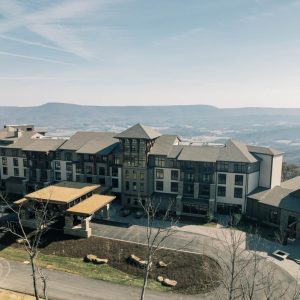
Next, the DDA turned to another item that Faircloth contributed to the agenda: leveraging McLemore’s wealthy clientele to bring more revenue into the city.
(One tangential but interesting comment from Faircloth during this section was, “Short-term rentals, I feel like our county is oversaturated with [vacation rentals] because now we’re all competing against each other.”)
Faircloth said that an employee at McLemore has told him that McLemore isn’t sending people to Trenton. “She said, ‘Where are we going to send them to in Trenton?’”
As Wesley Bethune (DDA chair) said, “They’re probably not too inclined to send their clientele to Jefferson’s,” and as Stephanie Lawson (DDA member) asked, “I don’t think people from McLemore are going to want to come down to Trenton when McLemore has restaurants on site that sell alcohol.”
Faircloth believes that Irvin’s restaurant idea (which would serve alcohol) would be perfect for the McLemore clientele. He said, “McLemore wants to spend some dollars here. They understand economics as: It’s not just their thing; it needs to be an outside thing. If they get more people up there that come down here, it’s the Home Depot-Lowe’s effect. We can do more here; they can do way more if we’re doing more here.”
Throughout this conversation, Monda Wooten (DDA member, city commissioner) and Faircloth got into a squabble about alcohol.
The DDA wasn’t opposed to strengthening connections with McLemore and encouraging establishments that would attract that clientele, but questions about feasibility, market desirability, and best way to accomplish this abound.
White explained that Trenton has plenty of services and food options, but more retail is needed to create a walkable, touristy, downtown area that capitalizes on consumerism.
Stone agreed, saying that food and services do great here, but retail struggles. Wooten said, “In retail here, you have to be perceived as discount, cheap.”
White’s solution for how to bring in retail options for tourists and shoppers with money is to find someone who isn’t relying on a retail business to sustain him/her financially. Instead, we need someone who would undertake it as a passion project—not that White doesn’t want a business to make a profit, but the Dade market has proven that it can’t sustain retail businesses that aren’t in the cheap goods/discount sector. (For example, The Shop on Main is closing this month due to low sales.)
(UPDATE 7/24/25: The Shop on Main’s owner, Tasha M. Leake, explained to the Sentinel that the business had good sales online and from tourists, but not from locals, hence her reason for closing the Trenton location.)
The board discussed the speed of development and change, with Faircloth on the “move faster” side (“We’ve been slow,” he said), and Wooten on the “move slow” side.
Bethune said, “One of the best people I’ve ever met when it comes to growth is Jeff Forester. He will explain to you what fast growth will do to your business: It will tear you down. Same way for the county.”
All agreed that we don’t want to become like Blue Ridge, Ga., where so much growth and gentrification has happened that it’s crowded and full of traffic and high prices.
Next, discussion briefly turned to events hosted by the DDA that would generate revenue for the board’s budget and projects. Stone said that LaFayette’s Honeybee Festival is put on by LaFayette’s DDA to fund the board’s work. Faircloth has proposed an Oktoberfest type of event.
Once again, Faircloth and Wooten got into a tiff over alcohol. He joked, “I guess all I wanna do is go drinkin’ ’cause it’s so boring around here.” She said, “I love you Ryan, but if you hate it here—” (“I don’t hate it here; I love it here,” he said,) “—go to Chattanooga.”
“I do,” he answered, “and they’re getting my money.” Wooten said she didn’t care, and Ryan responded, “You should care. You should care that people are spending money outside of this city and county versus here.”
Bethune called the meeting back to order and said that this month’s homework is for the board members to brainstorm event ideas that would bring tourists to the city and generate operating revenue.
As for the façade grant that the DDA had hoped would be funded by the local banks, Bethune reported that both banks declined, much to the disappointment of the DDA. He said, “They want to see us develop, do something, get involved with the community, and then maybe approach them later. Yes, they did it in the past, but they didn’t really see the reward for the city.”
Bethune said he would be willing to donate to get the program started, and he would like to seek out contributions from other businesses who take care of their façades.
Of the city providing $1,000 a year for the DDA’s initial operating budget, Wooten reported that she has talked to Alex Case (mayor) and is certain the city would commit the funds. However, this has not been discussed or voted on at the City of Trenton commission meetings.
Returning to the rural zone designation application (see the June 18 Sentinel), Bethune gave his fellow board members a list of the things they need to work on to be able to apply by August 2026 (before the program sunsets). The list includes a SWOT analysis (strengths, weaknesses, opportunities, threats). Bethune said, “We are going to work on one thing at a time, and we’re not going to leave a section until it’s completed.”
Lastly, the Sentinel asked if anyone has checked with Canyon Grill about profitability now that the restaurant can serve alcohol. (See the Feb. 12, 2025, Sentinel.) Bethune said the restaurant has been doing well since the county ordinance changes.
The Sentinel asked why guests at McLemore would come down to Trenton to eat and/or drink when they already have several options at McLemore plus Canyon Grill and Lookout Mountain Pizza Company. Some DDA members felt that repeat guests and those staying at McLemore for a week or more will tire of the same places over and over again and will want to venture down the mountain.
The Sentinel also mentioned The Upper Bank as a seemingly successful, classy restaurant that serves alcohol and is in a rural area—not unlike Canyon Grill—so has the DDA looked at them as an example of how to draw people to an area?
Bethune said that from what he understands, the restaurant saw a large amount of interest after first opening, but eventually, business slowed. The owners hired a marketing director who has helped the business succeed.